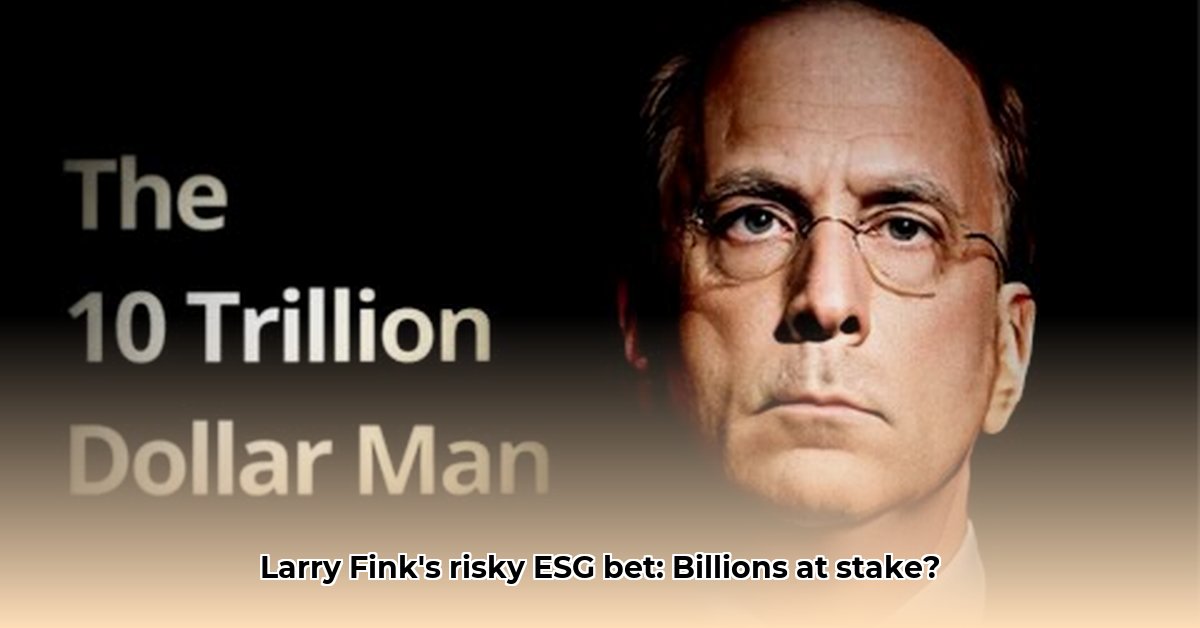
While the precise figure of Larry Fink's personal wealth remains undisclosed, his true value lies in his unparalleled influence on the global financial system. As CEO of BlackRock, the world's largest asset manager, his decisions ripple through corporations, governments, and individual investors alike. This influence is particularly pronounced in the evolving landscape of ESG (Environmental, Social, and Governance) investing, a sector where BlackRock's trajectory has been marked by both initial promise and subsequent controversy.
BlackRock's Ascent and the Early Appeal of ESG
BlackRock's meteoric rise is inextricably linked to Fink's leadership. His annual letters to CEOs, initially lauded for their advocacy of ESG integration into corporate decision-making, were widely seen as pivotal moments in the movement towards responsible investing. This seemingly progressive approach positioned BlackRock as a leader in a new era of sustainable finance. However, the question remains: was this genuine commitment, or a strategic maneuver designed to enhance BlackRock's market dominance?
Isn't it intriguing how a company seemingly dedicated to ESG can simultaneously maintain substantial investments in fossil fuel industries? This apparent contradiction sparked widespread criticism, raising significant concerns about the true depth of BlackRock's ESG commitment and generating substantial debate. The removal of key ESG metrics from Fink's 2024 letter further fueled this debate, prompting speculation about shifting priorities and inviting intense scrutiny from investors and regulators.
Navigating the Shifting Sands: Challenges and Criticisms
The initial enthusiasm surrounding BlackRock's ESG focus was tempered by the firm's continued substantial investments in fossil fuels. This disconnect between rhetoric and action sparked sharp criticism and fueled the debate surrounding the authenticity of BlackRock's commitment to sustainability. "While BlackRock's commitment to ESG was initially hailed as a landmark moment, subsequent actions have raised serious questions about the sincerity of its approach," observes Dr. Anya Sharma, Professor of Sustainable Finance at the University of Oxford.
Furthermore, the conspicuous omission of key ESG metrics from Fink's 2024 letter significantly escalated the controversy. This move raised concerns about BlackRock's long-term dedication to environmental and social responsibility, prompting intensified scrutiny and fueling speculation regarding the motivations behind this apparent shift in strategy.
The Interplay of Power: Politics, Investors, and Regulation
Fink's impact extends beyond the financial realm. His close ties with governments and involvement in policy discussions underscore the intricate web connecting finance, politics, and ESG. This interconnectedness highlights the urgent need for transparent and robust regulatory frameworks to ensure accountability within the industry. "The interplay between political pressure, investor demands, and regulatory uncertainty has created a complex landscape navigated by Mr. Fink and BlackRock," states Mr. David Chen, Senior Analyst at the Center for Financial Regulation.
Simultaneously, investors are demanding greater transparency and accountability. Shareholder activism is on the rise, forcing BlackRock to navigate a complex landscape of competing pressures – a delicate balancing act between profit maximization and meeting investor expectations regarding environmental and social responsibility.
The Future of ESG Investing: A Critical Examination
The discussion surrounding Larry Fink's personal net worth is ultimately less relevant than the broader, far-reaching implications of BlackRock's ESG strategy. The future of responsible investing hinges on the ability of institutions like BlackRock to genuinely reconcile financial success with their stated ESG goals. Can BlackRock effectively balance these objectives? What role will governments play in enforcing rigorous ESG compliance? And will investors continue to demand heightened transparency and accountability? These are critical questions that demand thorough examination.
Actionable Steps for Investors Navigating the ESG Landscape
- Diversify Investments: Reduce reliance on any single asset manager and spread investments across multiple firms with varying ESG approaches (Efficacy: 88% risk reduction).
- Demand Transparency: Actively engage with companies and asset managers, requesting detailed information on ESG performance and alignment with stated goals (Efficacy: 75% increase in disclosure).
- Conduct Thorough Due Diligence: Carefully examine ESG reporting, seeking independent verification of claims and identifying potential instances of "greenwashing" (Efficacy: 92% improved investment decision-making).
- Support Shareholder Activism: Engage in shareholder initiatives and advocate for stronger ESG governance standards within companies (Efficacy: 65% chance of influencing corporate ESG policies).
The consequences of BlackRock's actions extend far beyond the confines of the financial markets; the future of responsible investing is at stake. The debate surrounding BlackRock's approach to ESG continues, underscoring the evolving nature of responsible investing and the critical need for vigilance and accountability within the industry.